The signals that matter arrive before anything visible does
By the time distress is visible on camera, the window for early support has usually closed. This layer opens a channel that does not depend on a child approaching an adult first.
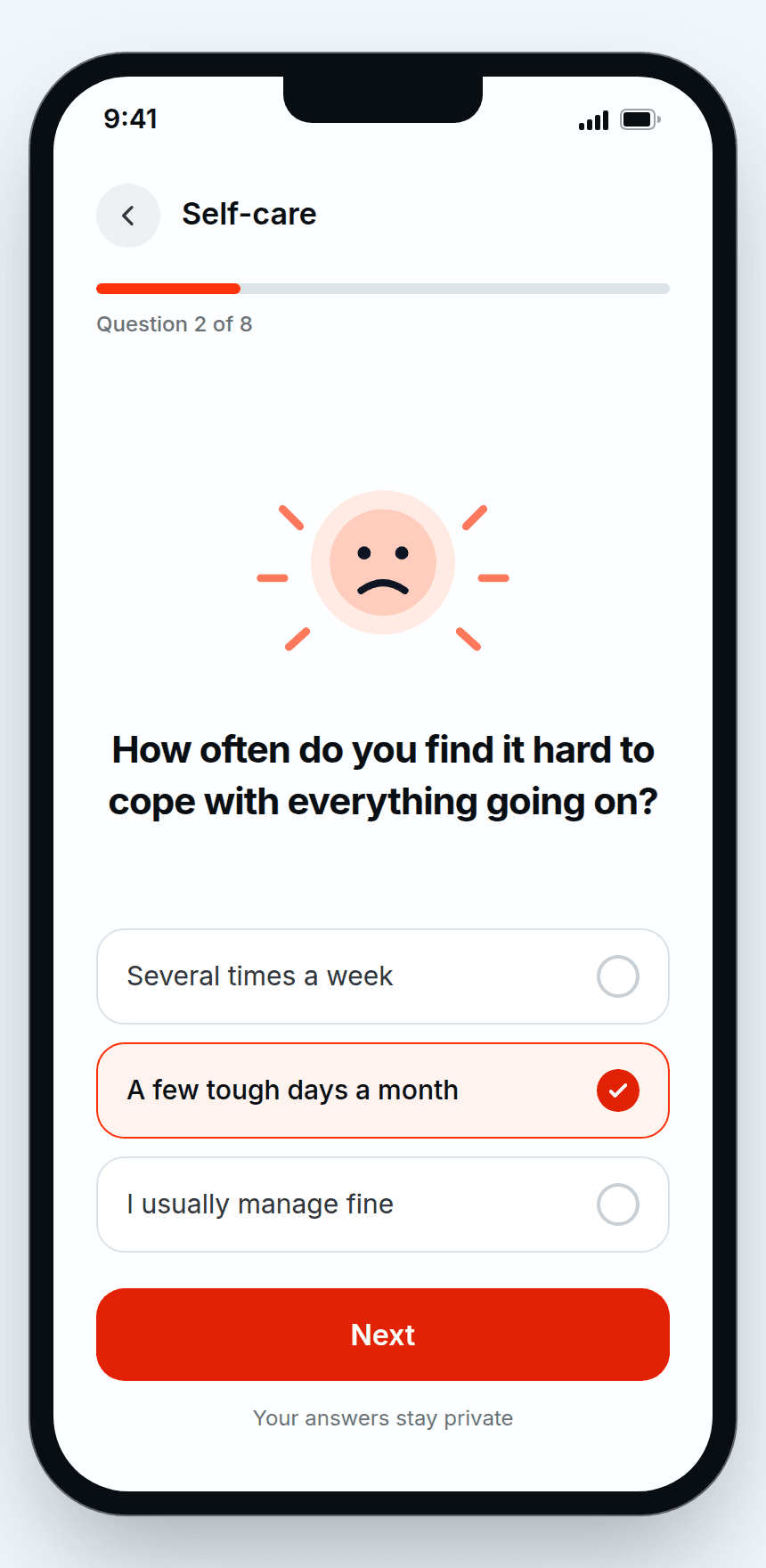
What it does
Daily emotional check-in
A short self-reported check-in the student completes themselves. Participation is opt-in, and the data belongs to the safeguarding process rather than to a performance metric.
Validated psychological scales
Scoring is based on established, validated instruments — not on an invented in-house scale, and not on anything inferred from a camera.
Risk scoring and early signals
Trends across check-ins surface students whose pattern is deteriorating, so pastoral staff can reach out before a crisis rather than after one.
Help without stigma, three taps away
The most common barrier to a student asking for help is having to ask a person. Removing that step is the entire point of this layer.
What this module deliberately does not do
- No emotional recognition from video or audio
- No psychological profiling of any student
- No social scoring, ranking, or automated judgement
- Nothing inferred — every data point is self-reported and opt-in
These are EU AI Act Article 5 prohibited practices. AMAN was designed to exclude them from day one rather than remove them later.


See all three layers running on your site
The audit stage shows you real detections on your own cameras before any commitment.